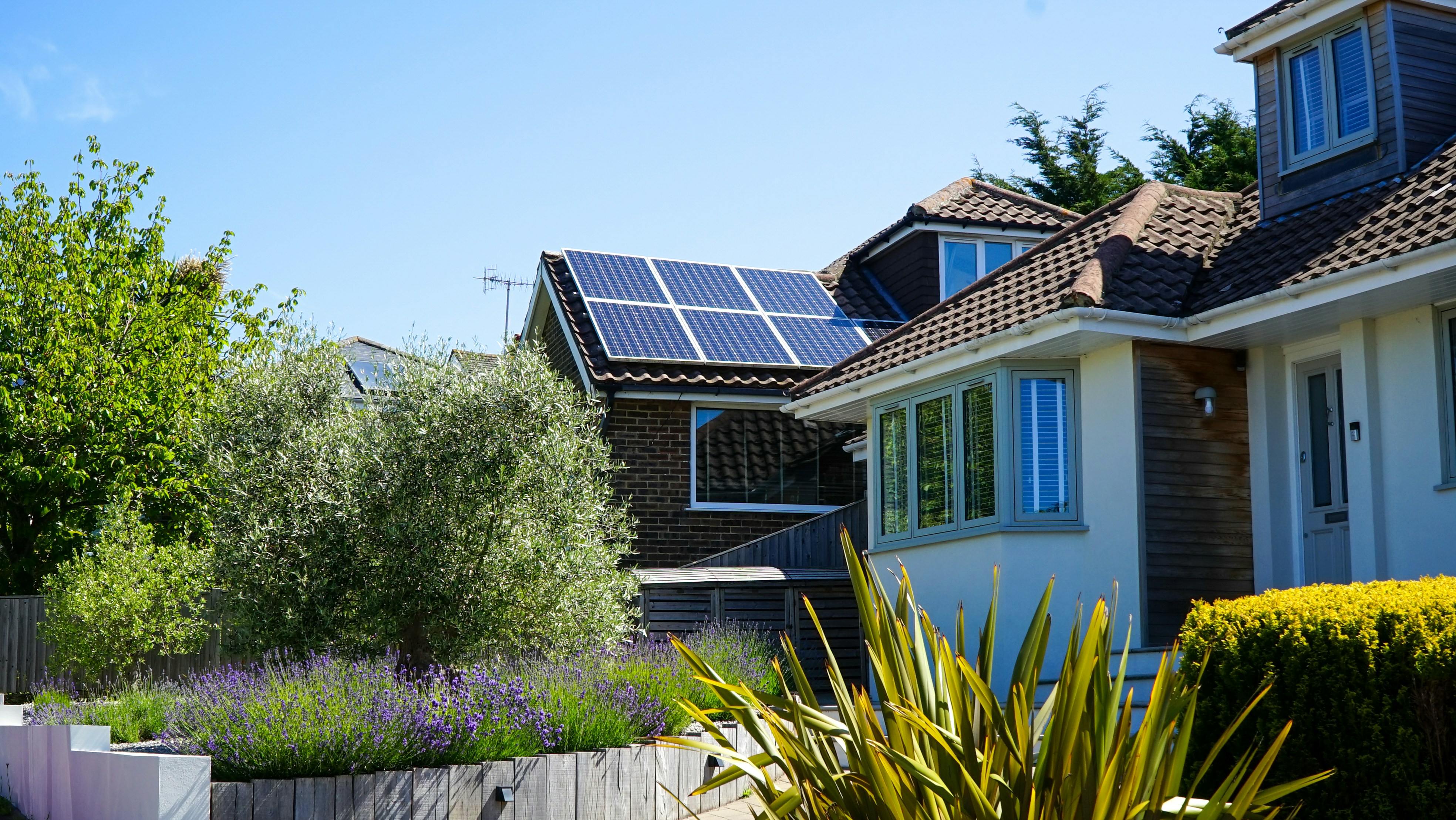
TL;DR: The best time to run appliances with solar panels is roughly 10am to 3pm, when your panels produce more than the house is using. The exact window shifts daily with weather, season and roof direction, and every kilowatt-hour you self-consume is worth 5-8 times more than one you export.
The best time to run appliances with solar panels is generally between 10am and 3pm, when the sun is high and your system produces the most electricity. But that headline answer hides the part that actually matters: the ideal window shifts every day with cloud cover, season and the way your roof faces. On a clear summer afternoon you might have five hours of strong surplus solar; on a grey winter morning you might have ninety good minutes. Getting the timing right is the single biggest lever you have to cut your power bill without spending a cent on new hardware.
The short answer (and why it is not the whole story)
If you only remember one rule, make it this: run high-draw appliances in the middle of the day, with 10am to 3pm as a safe default. During those hours the sun sits highest in the sky, your panels are closest to their rated output, and there is usually power to spare after the fridge, standby loads and lights have taken their share.
The catch is the phrase "power to spare". What you are really chasing is not a clock time, it is surplus solar: the amount your array generates beyond whatever the house is consuming at that moment. If your panels are producing 4kW and the home is already using 1.5kW, you have 2.5kW of free energy available, enough to run a washing machine or a dishwasher entirely on sunshine. Start that same load at 8am when production is only 1kW and most of it pulls from the grid instead. The clock is a useful proxy, but surplus is the thing that saves you money.
Why midday is the solar sweet spot
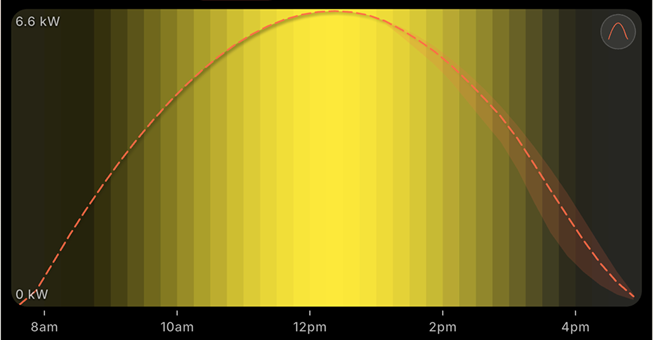
Solar production follows a predictable bell curve across the day. Output climbs from sunrise, builds through the morning, peaks around solar noon, then tapers to nothing by sunset. The steep middle of that curve is where the surplus lives, because that is where generation most comfortably exceeds the baseline demand of a typical home.
This matters because of a price gap most people only discover after their first full bill. The electricity you draw from the grid is charged at the retail rate, commonly 25 to 40 cents per kilowatt-hour: Victoria’s regulated default offer is 25.96 to 28.22c[3], the UK price cap 26.11p[4], and Californian households averaged 33.25c in May 2026[5]. The surplus solar you export earns only a feed-in tariff, which in many markets has fallen to single digits: 3.4 to 6.5c on the NSW regulator’s 2026-27 benchmark[1], and 4.47p on the average untied UK export tariff[2]. So exporting solar and buying it back later is a losing trade, and the entire point of timing your appliances is to flip that trade in your favour by using the energy yourself.
Every kilowatt-hour you self-consume is worth what you would have paid the grid, not what the grid pays you. That is the whole game.
How the ideal window changes with weather and season
Treat 10am-3pm as a starting point, not a fixed law, because three things constantly reshape your production curve.
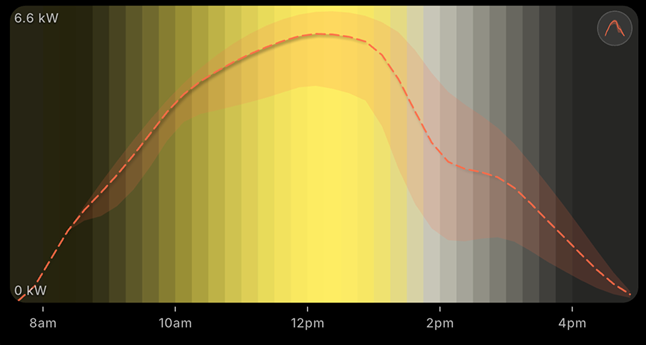
Cloud cover. A passing band of cloud can cut output by half within minutes. On a partly cloudy day your reliable surplus window might shrink to a couple of hours, or split into broken patches, so it pays to start your longest loads when the sky is genuinely clear rather than gambling on a forecast gap.
Season. In summer the sun rises earlier, sits higher and stays up longer, giving you a wide, generous window. In winter the whole curve compresses: production starts later, peaks lower and finishes earlier, so a load that easily ran at 2pm in midsummer may struggle at the same hour in midwinter. (Which calendar months those fall in depends on where you live: peak summer sun lands around December and January in the Southern Hemisphere, and June and July in the Northern.) Shorter winter days mean tighter timing. How far the curve compresses depends on your latitude, and our summer vs winter output guide draws both curves for your location so you can see the size of the drop before you plan around it.
Roof orientation. Panel direction tilts the whole curve. Arrays facing the equator (north-facing in the Southern Hemisphere, south-facing in the Northern) give the classic midday peak. East-facing panels front-load their output, so your best window arrives mid-morning. West-facing panels hold their production later, which is handy if your household demand spikes in the afternoon. Split-array homes get a flatter, broader curve. If you want a deeper walk-through of orientation and tilt, our Solar Savings Guide covers it in plain language.
Best times for specific appliances
Different appliances suit different parts of the solar window. The draw figures below come from published energy-label test data[6], which is also what OnSun’s appliance profiles are calibrated against. Here is the at-a-glance version, with the detail on each below.
| Appliance | Typical draw | Best window |
|---|---|---|
| Washing machine | 0.5-1.5kWh per cycle | Late morning to early afternoon |
| Dishwasher | Roughly 1kWh per cycle | Early afternoon, on delay-start |
| Clothes dryer | 2-3kWh per cycle | Clear-sky midday |
| Pool pump | About 1kW for 3-5 hours | The broad 10am-3pm block |
| EV charger | Up to 7kW while charging | Across the solar peak |
| Hot water | 1.8-3.6kW element; 0.5-1kW heat pump | Middle of the day |
Washing machine
One of the easiest wins. A typical cycle draws around 0.5-1.5kWh and finishes in an hour or two, so it slots neatly inside the surplus window. Aim for late morning to early afternoon, and if your machine has a heated wash that pushes the draw higher, lean towards the clearest, sunniest part of the day. One detail from calibrating OnSun's appliance profiles against published energy-label data: a washer's average draw looks modest, around 0.4kW across a cycle, but the heating element spikes to 1.8-2.5kW in short bursts, so a machine that 'only uses 1kWh' still wants a couple of kilowatts of surplus behind it when those bursts hit.
Dishwasher
Similar profile to the washing machine at roughly 1kWh per cycle (more on hot programs, less on eco), with the water heating and heated dry doing most of the drawing. Use the delay-start timer most dishwashers already have to push the cycle into the early afternoon, rather than running it straight after dinner when your panels have switched off and you are buying grid power.
Clothes dryer
One of the heaviest loads in the house, often 2-3kWh per cycle, especially older vented models. Only run it when production is strong and steady, so reserve it for clear-sky midday and ideally not at the same moment as another big appliance unless your system is large.
Pool pump
A pool pump runs for hours, which makes it ideal solar fodder. Set its timer to cover the broad midday block, say 10am to 3pm, so the bulk of its long, steady draw is met by your panels rather than spread across expensive evening hours.
EV charger
Electric vehicles are the largest flexible load most homes will ever own, and that makes daytime charging valuable. If your car is home during the day, schedule charging across the solar peak: a 7kW home charger adds roughly 40km of range per hour, so even two or three sunny hours put a useful chunk back in the battery. If it is only home overnight, weigh your feed-in tariff against any cheap off-peak rate, since the maths can occasionally favour an overnight plan. Our piece on feed-in tariffs versus self-consumption unpacks that trade-off.
Hot water
If you have an electric or heat-pump hot water system, shifting its heating cycle into the solar window can be one of the biggest savings of all, because hot water is essentially a battery you already own. A conventional element draws 1.8-3.6kW while it heats; a heat pump closer to 0.5-1kW over a longer run. Either way it is a big, flexible block of demand that is happiest on midday sun. Many systems can be set to heat during the day instead of overnight; check whether yours has a daytime boost or timer setting.
Quick tip: stagger, do not stack. Two big appliances running together can exceed your surplus and start pulling from the grid even at midday. If in doubt, run the dryer, then the dishwasher, both inside the strongest part of the window, rather than overlapping them and quietly buying power you thought was free.
A simple daily routine to capture more free solar
You do not need to micromanage every watt. A light routine captures most of the benefit:
- The night before, load the dishwasher and washing machine and set their delay timers to start late morning.
- In the morning, glance at the day's solar forecast and the sky. A clear day means you can run everything; a patchy day means prioritise your single biggest load for the sunniest stretch.
- Across the middle of the day, let the pool pump, hot water and EV charging do their work on surplus solar, staggered rather than stacked.
- In the evening, avoid starting heavy loads. The panels are off, and anything you run now is grid power at the full retail rate.
Done consistently, this is the difference between a self-consumption rate stuck at 25-35% and one well above it. The peer-reviewed average gain from load shifting alone is 2-15 percentage points[7]; homes moving genuinely large loads such as EV charging or electric hot water get to 60-80%, which is where the real savings live. If you are weighing a battery against this free habit, the battery vs load shifting calculator runs both over ten years on a year of your own local weather, and shows how much of the saving good timing captures before you buy anything.
How a 7-day solar forecast removes the guesswork
The honest problem with all of the advice above is that "run it when there is surplus" assumes you can see the surplus coming. You cannot eyeball Thursday's cloud cover on Monday, and the difference between a brilliant solar day and a poor one is often decided by weather you have not had yet.
That is the gap OnSun fills. It forecasts your specific production up to seven days ahead by combining detailed weather data with your system's size, tilt and orientation, then turns that into plain recommendations such as "run your washing machine at 11am Wednesday." You get to see which days will be sunny enough for the dryer and the EV, and which days are better spent on lighter loads, all before the week starts. If you are curious about the mechanics, our explainer on how solar forecasting works goes under the bonnet.
A few honest caveats. OnSun does not switch your appliances on or off; it tells you the best time and you press start, or use the appliance's own timer. It needs no smart plugs or special hardware and works with any grid-connected system worldwide. And every savings figure is an estimate based on your details and the forecast, not a guarantee, because the weather on the day always gets the final vote. If you hit a snag setting up your system details, our support page walks you through it.
Key takeaways
- The general best window is roughly 10am-3pm, when solar output peaks against household demand.
- The real target is surplus solar: power your panels make beyond what the house is already drawing.
- The ideal window moves daily with weather and season, and shifts earlier or later with east or west-facing panels.
- Self-consuming a kilowatt-hour is worth 5-8x more than exporting it, because retail power costs far more than the feed-in tariff.
References
Every figure below names the market it applies to and the period it covers. Energy prices and incentives change, so treat dated figures as a snapshot, not a promise. Savings shown in OnSun are estimates, not guarantees.
- AustraliaIPART (NSW pricing regulator), Solar feed-in tariff benchmark for 2026-27. All-day benchmark 3.4-6.5c/kWh, down from 4.8-7.3c in 2025-26. Back to text
- UKOfgem, Smart Export Guarantee annual report, year 5 (April 2024 to March 2025). Average export rate 10.80p/kWh: 4.47p on untied tariffs, 15.39p on tariffs tied to buying your power from the same supplier. Back to text
- AustraliaEssential Services Commission Victoria, Victorian Default Offer 2026-27. Regulated residential flat usage charge 25.96-28.22c/kWh from 1 July 2026, by distribution zone. Back to text
- UKOfgem, Energy price cap unit rates and standing charges. Electricity 26.11p/kWh for a typical direct debit customer, 1 July to 30 September 2026. Back to text
- USAUS Energy Information Administration, Electric Power Monthly, table 5.6.A. Average residential price 18.44c/kWh nationally and 33.25c/kWh in California, May 2026. Back to text
- AU / EUAustralian Government Energy Rating product registry and the EU EPREL database. Registered per-cycle and annual energy figures from standardised testing; OnSun’s appliance profiles are calibrated against this energy-label data. Back to text
- Peer-reviewedLuthander, Widén, Nilsson & Palm, Photovoltaic self-consumption in buildings: a review, Applied Energy 142 (2015), 80-94. Battery storage of 0.5-1 kWh per installed kW raised self-consumption by 13-24 percentage points; demand-side management (load shifting) raised it by 2-15 points. The underlying studies are almost all European (Germany, Sweden, Spain, Italy and Switzerland, plus one from Japan), so treat them as well-measured European ranges rather than a reading of your own street. Back to text
Any range not attributed to a source above is an indicative market figure gathered in August 2026, not a quote for your address. Prices and incentives in every market change at least yearly. Every OnSun savings figure is an estimate, never a guarantee.